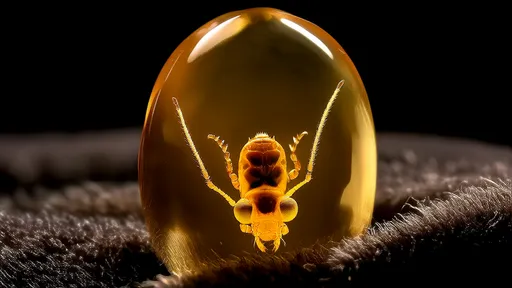
The world of synthetic resins has witnessed a significant breakthrough with the development of amber-like resins boasting an exceptionally low yellowing index. These advanced materials, characterized by a Δb value of less than 1.0, are redefining industry standards for color stability in polymer applications. As manufacturers increasingly prioritize long-term aesthetic performance, this new generation of resins offers unparalleled resistance to the unsightly yellowing that traditionally plagued plastic products exposed to light and environmental stressors.
At the heart of this innovation lies a sophisticated understanding of polymer photochemistry. The yellowing phenomenon in conventional resins stems from complex photochemical reactions that create chromophores - light-absorbing molecular structures that impart yellow coloration. Through meticulous molecular engineering, researchers have developed stabilization systems that effectively intercept these degradation pathways before visible discoloration occurs. The result is a material that maintains its optical clarity with Δb values consistently below the critical 1.0 threshold, even under accelerated aging conditions.
Market applications for these advanced resins span multiple industries where visual appearance matters. In the luxury packaging sector, brands are adopting these materials for premium cosmetic containers that must retain their pristine appearance throughout product shelf life. Automotive manufacturers are incorporating the resin into interior components that face constant sunlight exposure without compromising color integrity. Perhaps most notably, the lighting industry has embraced these resins for high-end LED diffusers where even slight yellowing can dramatically alter light quality and color temperature output.
The technical achievement becomes even more impressive when considering real-world performance metrics. Independent testing laboratories have subjected these resins to QUV accelerated weathering tests equivalent to several years of outdoor exposure. The results consistently show Δb values remaining well below 1.0, outperforming conventional UV-stabilized resins by a factor of three to five. This performance gap widens further in high-temperature environments, making the material particularly valuable for applications in tropical climates or near heat-generating components.
Manufacturing these advanced resins requires precise control over multiple formulation parameters. The polymer base must be exceptionally pure, with catalyst residues and other potential chromophore precursors carefully removed. Stabilizer packages combine multiple synergistic technologies including UV absorbers, hindered amine light stabilizers (HALS), and antioxidant systems. Processing conditions are tightly controlled to prevent thermal degradation that could compromise the resin's initial color state. This comprehensive approach ensures the finished product starts with near-perfect optical properties before demonstrating its remarkable resistance to yellowing over time.
From a sustainability perspective, these resins offer compelling advantages. By dramatically extending the service life of plastic products before visible degradation occurs, they reduce replacement frequency and associated material consumption. Some formulations incorporate bio-based feedstocks without sacrificing performance, appealing to environmentally conscious brands. The extended durability also means fewer products entering waste streams due to cosmetic rather than functional failure - an important consideration in an era of increasing circular economy requirements.
The development timeline for these resins reveals the significant research investment behind this innovation. Early prototypes five years ago struggled to achieve Δb values below 3.0 after accelerated aging. Through iterative improvements in molecular design and stabilization chemistry, researchers progressively pushed performance boundaries. The breakthrough came with a novel stabilization mechanism that interrupts the photo-oxidation cascade at multiple points, effectively stopping yellowing before it begins rather than just slowing its progression.
Quality control for these resins involves specialized testing protocols beyond standard industry practices. In addition to conventional spectrophotometric measurements, manufacturers employ sensitive analytical techniques like fluorescence spectroscopy to detect early-stage degradation invisible to the naked eye. Batch-to-batch consistency is maintained through statistical process control methods that monitor dozens of parameters throughout production. This rigorous approach ensures every shipment meets the demanding Δb specification that has become these materials' signature feature.
Looking ahead, researchers are working to extend this technology to colored resins while maintaining the same exceptional color stability. Early results suggest the stabilization mechanisms effective in clear formulations can be adapted to pigmented systems, potentially revolutionizing expectations for long-term color fidelity across the entire spectrum. As these advanced amber-like resins continue gaining market acceptance, they're setting a new benchmark for what's possible in polymer color stability - with Δb<1.0 becoming the gold standard for premium applications where appearance matters.
By /Aug 19, 2025

By /Aug 19, 2025
By /Aug 19, 2025

By /Aug 19, 2025

By /Aug 19, 2025
By /Aug 19, 2025
By /Aug 19, 2025
By /Aug 19, 2025
By /Aug 19, 2025

By /Aug 19, 2025
By /Aug 19, 2025
By /Aug 19, 2025

By /Aug 19, 2025

By /Aug 19, 2025
By /Aug 19, 2025

By /Aug 19, 2025
By /Aug 19, 2025
By /Aug 19, 2025

By /Aug 19, 2025

By /Aug 19, 2025
